- How common this has become
- Do I still have to pay?
- What happens to the warranties
- Who maintains and repairs the system
- If the company filed bankruptcy: claims and deadlines
- Your claims survive: the Holder Rule
- Liens, UCC-1 filings and selling the house
- A checklist for the first 30 days
- Questions people also ask
How common this has become
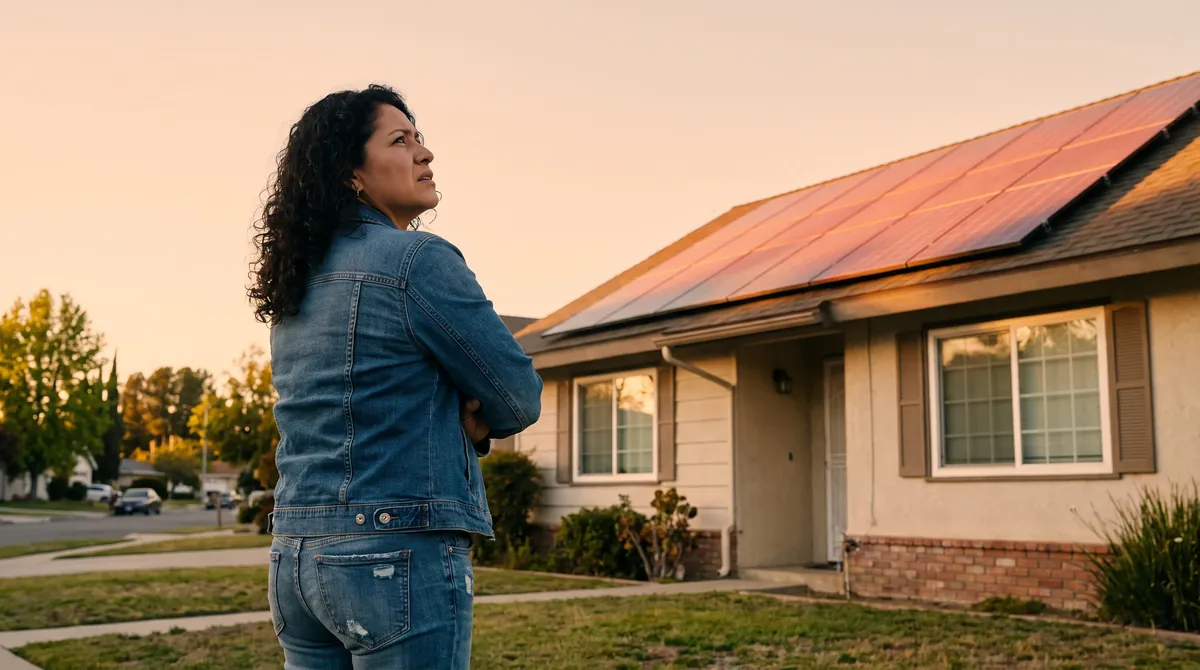
Residential solar grew on a model of commissioned door-to-door sales, dealer-arranged financing and thin margins, and when interest rates rose and California cut net-metering credits in 2023, the model broke for many companies. Titan Solar Power, one of the largest privately held installers, closed in June 2024 with roughly 150,000 customer systems. SunPower filed for bankruptcy in August 2024. Lumio followed in September 2024. Solar Mosaic, a major solar lender, filed in mid-2025, and Sunnova, which financed and serviced more than half a million homes, filed in June 2025. Industry trackers count well over 100 residential solar companies that have closed since 2023, affecting more than a million households. If your installer is gone, you are not an outlier; you are in the majority experience of a whole segment of homeowners, and the law has a clear framework for it.
Do I still have to pay?
Almost always, yes. This is the part that feels wrong and is nonetheless the rule. The company that knocked on your door and installed the panels is usually not the company you owe. Solar loans are originated by lenders (GoodLeap, Mosaic, Sunlight, Dividend and others) and sold into investment pools; leases and PPAs are owned by financing entities set up by the solar provider or its investors. When the installer closes, those contracts are assets of someone else and keep going. If the finance company itself files bankruptcy, as Sunnova and Mosaic did, the contracts are sold or transferred to a new servicer (SunStrong Management took over servicing for SunPower and later Sunnova customers) and you receive a notice telling you where to send payments.
What you should do: keep paying the current servicer, confirm any change of servicer in writing before you redirect a payment (servicer-transfer notices are a favorite target for scammers), and send the new servicer a written letter stating any claims you have about the original sale or the system's performance. That letter matters for the reason explained under the Holder Rule below.
The new holder has every remedy the old one had: late fees, acceleration, credit reporting, collections, a UCC lien on the equipment, remote shutoff, and a lawsuit or arbitration. An installer's bankruptcy is not your defense to the loan unless you assert the claims that make it one. See what happens if you stop paying your solar loan.
What happens to the warranties
A solar installation carries several different warranties, and they fail differently.
| Warranty | Who gives it | Usual term | After the installer closes |
|---|---|---|---|
| Panel product and performance | Panel manufacturer | 10 to 25 years product, 25 years performance | Usually survives; claim directly with the manufacturer. Covers the part, often not the labor. |
| Inverter | Inverter manufacturer | 10 to 25 years | Usually survives; register the serial number. |
| Battery | Battery manufacturer | 10 years | Usually survives, but some warranties require the installer\'s participation; ask. |
| Workmanship / installation | Installer | 5 to 25 years | Usually lost. Roof leaks and wiring defects become your cost unless another party is liable. |
| Production guarantee | Installer or lessor | Life of the agreement | Lost if the installer gave it; survives if the lease or PPA company gave it, because that contract survives. |
| Roof penetration warranty | Installer, sometimes the roofer | Varies | Usually lost. |
Two caveats. If the manufacturer has also failed (SunPower\'s own-brand panels are the obvious example), the product warranty may be assumed by a successor or may be in limbo; check the bankruptcy court\'s notices. And if your state requires contractors to carry a bond or contribute to a recovery fund (California, Arizona, Nevada and others), a workmanship defect may be claimable against the bond or fund within a filing deadline.
Who maintains and repairs the system
If your system is on a lease or PPA, the lease company is contractually responsible for maintenance and must assign a new service provider; hold it to that in writing. If you own the system through a loan or cash, you now hire your own servicer. Independent "solar O&M" companies and licensed electricians who service orphaned systems have become a sector of their own. Expect a baseline inspection to run a few hundred dollars. The manufacturers will often ship a warranty replacement part at no charge but will not pay the labor to install it unless your contract said otherwise, so a service relationship set up before something breaks is worth having.
If the system never worked properly or the installation damaged the roof, that is not a maintenance problem; it is a claim, and it belongs in the sections below.
If the company filed bankruptcy: claims and deadlines
A closure and a bankruptcy are not the same thing. A company that simply shuts its doors leaves you with claims against a shell that may have no assets; a company in Chapter 11 or Chapter 7 has a court process with rules you can use.
- Find the case. Federal bankruptcy dockets are public (PACER, or the claims agent\'s free website for large cases, such as Stretto, Kroll or Epiq). The claims agent\'s site lists every notice and deadline.
- File a proof of claim before the bar date. If the company owes you anything (a refund, a repair, damages for a system that never worked), file a proof of claim. It is a short form, there is no fee, and missing the bar date usually means losing the claim.
- Watch for your contract being sold. In large cases the court approves sales of lease and loan portfolios to new owners. Your rights under the contract travel with it; so, under the Holder Rule, do your claims.
- Executory contracts can be rejected. A bankrupt lessor can ask the court to reject burdensome contracts. That cuts both ways: you may be released from a lease, or you may be left owning panels you did not choose. Read every notice.
- Automatic stay. Once a company files, you generally cannot sue it outside the bankruptcy court. Claims against the finance company that holds your loan, if it is a separate solvent entity, are not stayed.
Your claims survive: the Holder Rule
This is the single most important thing to understand when an installer disappears. The FTC Holder Rule (16 CFR Part 433) requires consumer credit contracts arranged by a seller to carry a notice that any holder of the contract is subject to all claims and defenses the consumer could assert against the seller. Look at your loan agreement; the notice is there in capital letters. It means that if the installer misrepresented the savings, forged a signature, skipped the cancellation notice, or installed a system that never worked, you can raise those same facts against the lender that now owns the loan, as a defense to paying and as an affirmative claim up to the amount you have paid. Lease and PPA companies are usually the contracting party themselves, so the claims run against them directly, and against whoever buys the portfolio.
In practice this is how homeowners with a failed installer get a loan reduced, a lease released or payments refunded. It is also why the written notice to the new servicer described above matters: it puts the holder on record, and it starts the paper trail an attorney will use. Our page on suing a solar company covers the underlying grounds; our page on misrepresentation covers the most common one.
Liens, UCC-1 filings and selling the house
Most solar lenders and lessors record a UCC-1 fixture filing against the equipment in the county land records. It is not a mortgage, but title companies treat it as a cloud on title, and it must be terminated or subordinated when you sell or refinance. When the company that recorded it is gone, getting a termination can take weeks of chasing the successor servicer. Start as soon as you list the house. If no one will respond, your state\'s UCC statute (Article 9, section 9-513) gives you a procedure to demand a termination statement and, after 20 days, to file one yourself with a statement of the facts; a real estate attorney can handle it in an afternoon. The buyout and transfer guide covers transfers in detail.
A checklist for the first 30 days
- Confirm who holds your contract. Look at your last statement, call the number on it, and get the servicer\'s name and address in writing. Verify any transfer notice independently before changing where you pay.
- Keep paying, and dispute in writing anything you believe is not owed.
- Register every piece of equipment with its manufacturer using the serial numbers on the panels, inverter and battery. Photograph the labels.
- Pull your monitoring data and twelve months of utility bills. If production is below what was promised, write down the numbers now.
- Find the bankruptcy case, if there is one, and calendar the proof-of-claim bar date.
- Send the holder a written notice of any misrepresentation, defect or damage from the original sale and installation. Cite the Holder Rule notice in your own contract.
- Check your state\'s contractor bond or recovery fund for workmanship defects, and its filing deadline.
- Get an independent inspection if you have any sign of a roof leak or electrical fault; defects are easier to attribute before another company touches the system.
- Have the sale and the paperwork reviewed. Our free assessment identifies who owes you what and whether the original sale gives you grounds against the current holder, and connects you with an independent consumer attorney when the file calls for one.
Installer gone and still paying? You have more options than you were told.
Send us your contract and we identify who holds it now, what the manufacturers still owe you, whether a bankruptcy claim deadline is running, and whether the original sale gives you grounds against the new holder. Free, and we connect you with an independent attorney if the file calls for one.
Free · No obligation · No hard credit pull
Questions people also ask
Related reading

Sources
- 16 CFR Part 433, FTC Holder Rule (preservation of consumers' claims and defenses)
- CFPB, Issue Spotlight: Solar Financing (August 2024)
- United States Courts, Bankruptcy basics and filing a proof of claim
- Uniform Commercial Code section 9-513, termination statement
- ElectriCare, Solar installer out of business guide (industry closure figures)
- FTC, Consumer advice on solar power for your home
Reviewed October 2026. General information, not legal advice. CancelMySolar.ai is not a law firm; a licensed attorney in your state should review your contract before you act. Statutes and rules are summarized; the linked primary sources control.